Independent software assurance studio · Denmark, since 2021
We do not build your software. We measure whether it is sound.
Canine Development is an independent software assurance studio. We do not take development work. We survey codebases against an open standard and hand back a signed, reproducible report — one number from 0 to 100 — that the people who build software can put in front of a customer, and the people who buy it can take to a board. "Trust me" becomes something anyone can check.
We measure the code. Never the people behind it.
What we make
Three products.
Watchdog
An independent survey of a codebase, for the people who build software. The same scale every time, so it can be followed over time and put on the table in front of a customer or an auditor. You do not buy a house on the seller's word.
CAI
The open standard our products measure against. Free for anyone to use — including without us. It is the scale, not the tool, that makes a measurement comparable.
Assay
The same survey, written for the people who buy software rather than build it. For the decision where you have to vouch for something you cannot read yourself.
How an engagement works
From repository to report, in three steps.
1. Point Watchdog at a repository
Read-only access, nothing to install, no CI step. The first full survey of any repository is free.
2. Read the signed report
One 0–100 number on the open CAI standard, with findings down to file and line — delivered in minutes, and private to you unless you choose to publish it. The always-free open-source lane is the exception: it publishes by design.
3. Follow the number over time
The same scale every survey, on your team's cadence. The trend is the deliverable: proof the codebase is getting better, in a form you can hand to anyone.
Prices are public at watchdog.canine.dev/pricing. For the buyer's side of the same survey, see Assay.
Why we exist
The source code is not the truth.
The truth is the decisions
Most teams treat the codebase as the truth. It is not. The truth is the decisions: the domain, the rules, the architecture. Code is what those decisions became — and like any other product it drifts, decays and quietly stops telling the truth.
The gap is the whole job
That gap between what the software was meant to do and what the code actually does is where defects, risk and carelessness live. Measuring that gap — in the open, the same way every time — is the whole job.
Independence
Independence is not something you declare. It is something you arrange your business around.
We measure software. For that measurement to be worth anything, we must not have an interest in what it shows. Here is how we built that into the business instead of promising it.
We give the yardstick away
The scale our products measure against is an open standard under Apache-2.0. Anyone can implement it, check it — or use it against us. We sell the measurement, not the right to measure.
We publish the method before the numbers
Our measurement method and its adjudication rules were published before a single result existed. A percentage whose definition can be chosen after you have seen the number is not a measurement.
We measure ourselves
Our own codebase is measured on the same scale as everyone else's, and the report is public. A tool that cannot survive its own treatment is not finished.
We never recommend a brand
We measure companies that use these tools. So we point at categories of tool, never at brands. We earn nothing from what you choose — and that is the point.
We eat our own medicine
Our own code, on the same scale.
The open standard and the product that measures against it are themselves surveyed by Watchdog, and the full reports are public — every lens, every finding, live from the same feed as everyone else's. Open them before you trust us with your code.
What the two cards are: CAI is the open standard and its reference scorer. kennel.canine.dev is the codebase Watchdog and Assay themselves run on — so the score on the right is the instrument, measured by itself. Read the full reports: CAI · Kennel — or browse every published survey.
Held to in writing
Some sentences would sell better than they are true. We keep a public list of them.
Three of the claims our own people are trained never to make:
"We certify you"
We measure the automatable part. You declare. We never certify.
"A green score means the code is secure"
A clean automated result is necessary, not sufficient.
"We can adjust the number"
No party can move the number. Only the code moves it.
How we work
We have no opinions about your code. We have a discipline.
Everything we build and measure rests on the same engineering practice. It is not our own invention, and that is the point: a measurement has to rest on something practitioners already agree on.
Domain-driven design
Model the business, not the database.
Test- and behaviour-driven development
Prove the behaviour before you trust it.
Vertical slice and clean architecture
Boundaries that survive change.
Decisions as the source
Architecture and domain decisions are written down and kept alive, so the what and the why outlive any developer, any framework and any language model.
Who we are
Half of us work in quality assurance. That is not an accident.
We are a small Danish team. When you sell measurements that others have to dare to trust, quality assurance cannot be something you get to last.
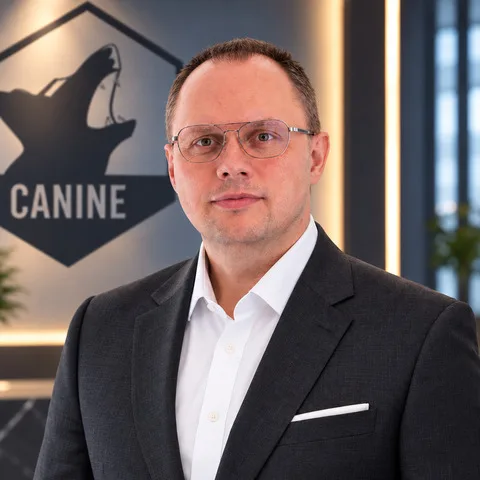
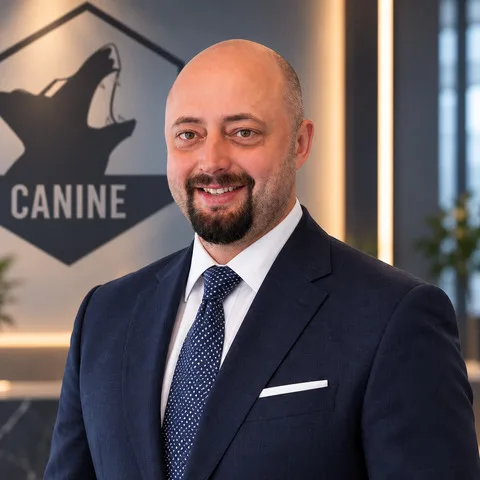
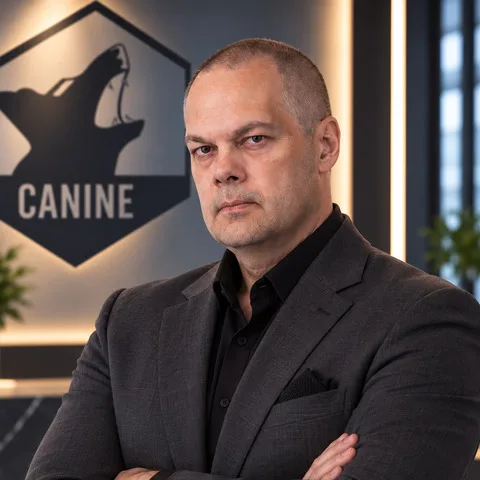

Behind the yardstick sit 25 years as developer, architect and CTO: lawful-interception platforms for government agencies under audit and chain-of-custody constraints, global track & trace across hundreds of Danfoss factories, and a decade running his own product company, sold in 2020. The yardstick exists because Jimmy kept needing one that held.
How we got here
From consultancy to assurance.
- When
- What happened
- 2021
- Founded as a software and consulting house.
- Late summer 2025
- CodeHealth comes into being — what we now call Watchdog. We had been handed software built by outside developers whose quality we could not judge for ourselves, and no way to tell whether we had bought a pig in a poke. We had.
- Autumn 2025
- CodeCollie comes into being. The idea is that in enterprise software a great deal about sound style and architecture can be settled up front, so the team can concentrate on the business.
- Winter 2025
- We stop taking development work. Canine becomes an independent software assurance studio. The first working Watchdog is ready — and we do not release it. It was as noisy as the tools we had set out to do better than, and it was not yet clear how wide a survey has to reach. A measuring tool you do not trust yourself is not a product.
- Spring 2026
- We build the training corpus — the open-source projects the engine is calibrated and checked against — and expand from one language to many. The training corpus is what the instrument is tuned on. It is not the same thing as the surveys we publish, which are counted live on the measured-projects index; and which languages we survey today, and how deeply each one resolves, is published live too. We print neither figure here, because a number on a page is stale the day after it is typed.
- Summer 2026
- We pull CAI out of Watchdog and publish the measuring scale as an open standard under Apache-2.0. Shortly after we split the product itself in two: Watchdog for the people who build software, and Assay for the people who buy it. Those are two different questions, and they deserve two different answers.
- Autumn 2026 — planned
- Watchdog opens to the general public. What we were waiting for was the thing that stopped us in Winter 2025: every language we survey now sits under the noise target we set ourselves, and the quietest of them are approaching the goal we actually want. The per-language figures, the confidence interval on each and the evidence behind them are published live, including the ones that flatter us least — we do not print them here, for the same reason as above.
The company
Canine Development ApS
CVR 42092134
Vestervej 26, 8500 Grenaa, Denmark
Founded 27 January 2021
Data and operations in the EU
Want to know where your software stands?
We answer ourselves. There is no sales department.
We open to the general public this autumn, so there are no customer logos here yet. Read the public surveys instead — they are the product, not a brochure about it.
Contact
Write to us. A person answers.
No sales department and no ticket system — the reply comes from one of the four people above, usually within one business day.